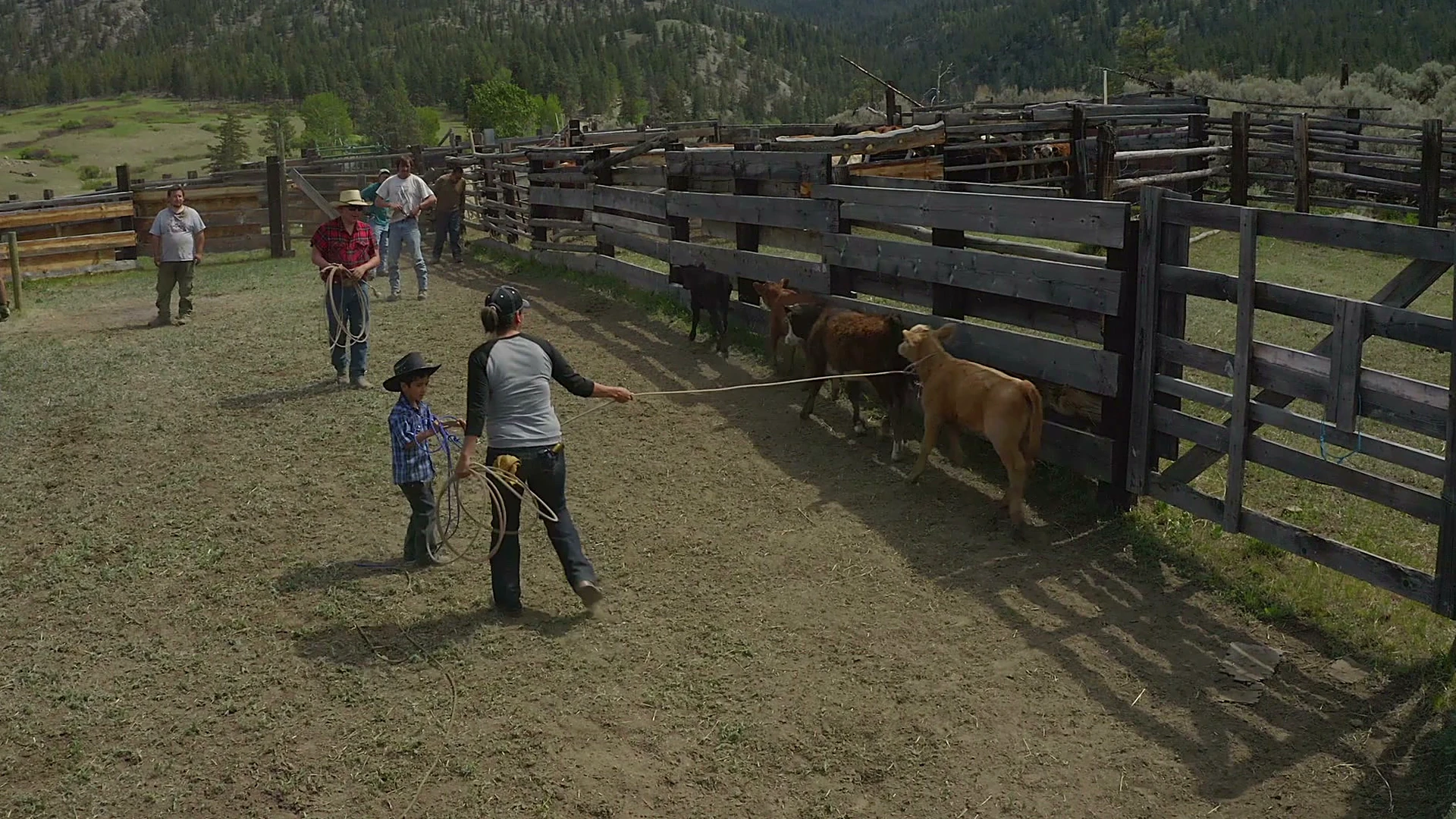
A community gathering at the corral in Pukaist territory
Our people

Community

Life at Pukaist — our families, our language, and the work we share along the Thompson River.

Our Community

Our community

We are still here, still living from the land along the Thompson River — our families of all ages, our language, and the work we share season to season.

We hunt, we fish, we grow our own, and we raise our children to know where they come from. On this page we share public community context — not the whole body of our knowledge — focusing on our places, the teaching we pass between generations, and what we choose to share.

What this page holds

Public community context, with clear limits

  • Continuity of our names, places, and family-linked records
  • Public context on teaching, land use, and community memory
  • Clear limits around what remains with us
From youth to Elders

Working the land, one generation alongside the next

Still from the People of Pukaist video

Continuity

A place that keeps its name

The names Pokaist and Peymanoos have remained part of our community and the historical record. A 2011 dissertation by a Pukaist descendant ties archival reserve names directly to the places where she grew up, and early twentieth-century records also preserve Pokaist and Pokhaist as named places.

Teaching

How we carry knowledge

Our Nlaka'pamux practice of huckpestes is described in a 2011 dissertation connected to our family context as a way of building wisdom through storytelling, reflection, and intergenerational learning. The same work also describes family-oriented teaching in Nlakapmuxcin as a living framework, not only a historical one.

In our own film that teaching is plain to see: children learning to rope, watching and working beside their Elders, raised to know who they are. Girls and boys were raised to every part of the work — a mutual respect among our families, and between one another.

Land use

River lands and high meadows

A 2008 historical report describes our reliance on both riverine lands along the Thompson River and the high meadows of Highland Valley for hay, grazing, trout fishing, and other resources. In 1913, McKenna-McBride testimony described cultivated fields, seasonal hay lands, water challenges, and the importance of open range beyond the reserves. We still live from that land today — we hunt, we fish, we grow our own food, and we keep the seasonal rounds our families have always followed.

Gathering

We still gather to work and share

Still from the People of Pukaist video

Community pathways

Where you can go next

Each public page covers one part of our community — language, places, history, stories, and how to reach us.

Public sharing

How we share here

We do not include all of our community and family knowledge here. Our public pages share what is ready for public access. Other materials remain with us or require further review before any public use.

Society purpose

Our purpose

To support the redevelopment of our cultural practices, traditions, and language, and to support our community members from youth to Elders.

People of Pukaist Society, incorporated September 20, 2022.

Public note

What remains with us

This page shares public-facing community context. It does not claim to contain the full record of our knowledge, family knowledge, or internal materials.